
Dealing with Religious Regret
Oct 15, 2023
Looking back on your time in religion, we know how easy it is to start turning on yourself, to replay it all and feel that familiar wave of self-criticism creep in.
You might find yourself questioning old choices or things you once believed, or feeling a wave of regret about how long you stayed. And without even realizing it, that reflection can turn into a relationship you’re having with yourself in the present, one that sounds critical, impatient, or even a little unforgiving.
But there’s another way to relate to that version of you, and it doesn’t require you to rewrite your past or pretend it didn’t affect you.It begins with a simple, but often overlooked question: What were you needing back then?
Because you didn’t believe what you believed for no reason. You weren’t just following rules or staying in a system out of blindness or weakness. Something about that environment met you in a real place, or at the very least, promised that it would. And even if the system itself didn’t truly meet those needs, it created a powerful promise that it would. It taught you that if you could just believe a little more, try a little harder, or align yourself more fully, things would eventually feel the way they were supposed to.
And when that didn’t happen, when the peace or security never quite landed, most people didn’t question the system they were in. They turned inward and assumed they were the problem. It felt easier to believe you were falling short than to consider that what you had been given might not actually work.
Underneath all of that effort, though, was something much more honest:
You were trying to take care of yourself.
You were trying to find grounding, connection, reassurance, and a sense of being okay in the world.
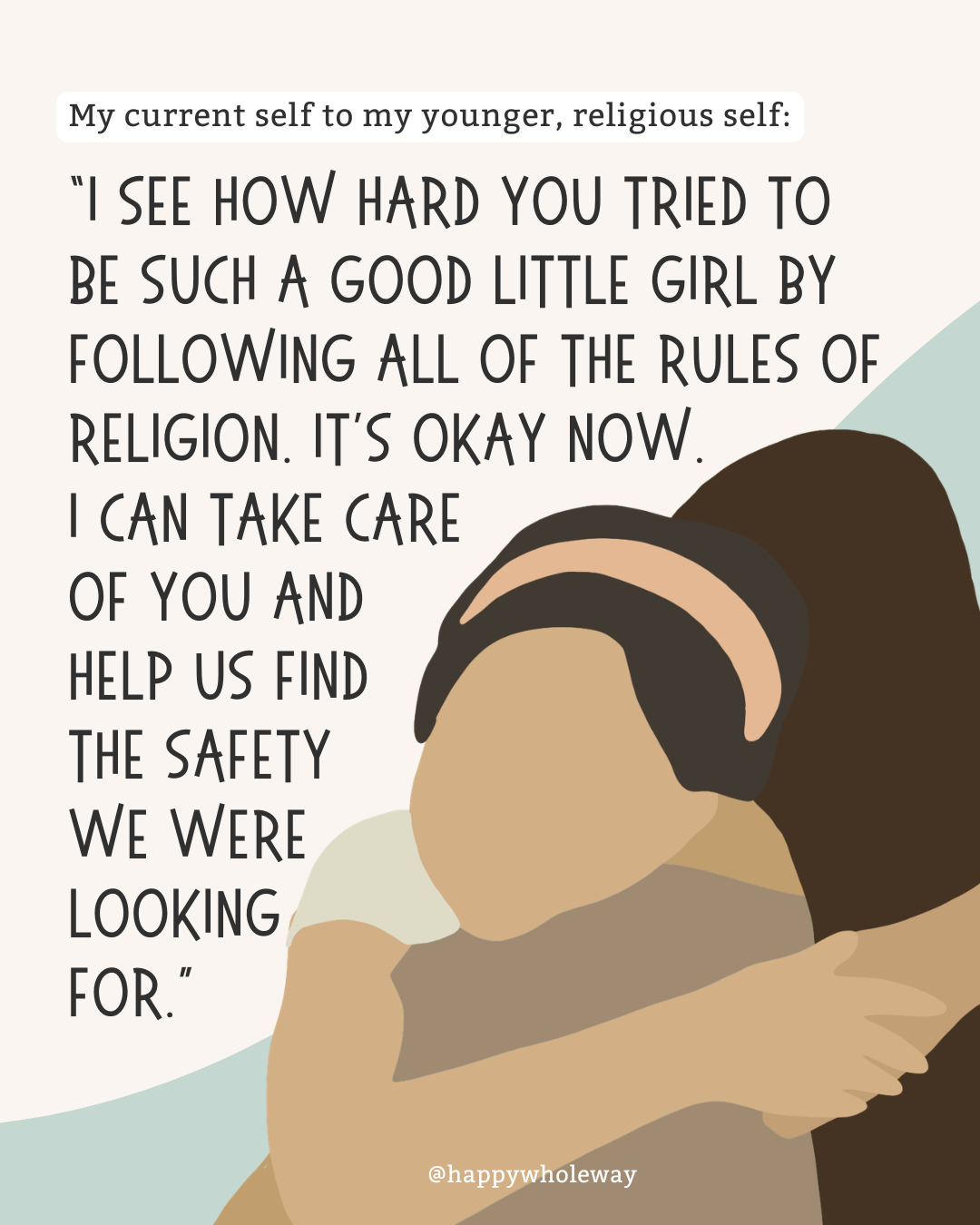
When you look back now, it can be tempting to judge that version of you for staying, for believing, or for shaping yourself in ways that no longer feel true. But when you begin to see her through the lens of what she was needing, something can begin to soften. You start to recognize that she wasn’t foolish or weak. She was responding in the best way she knew how to the environment she was in.
Of course she stayed. Of course she believed it. There was something important she was trying to hold onto.
And this is the part that often gets missed. Those needs didn’t disappear when you left. They didn’t resolve themselves just because you deconstructed or changed your beliefs. They are still present, still influencing how you move through your life now.
Which means the work isn’t to shame your past or distance yourself from who you were. It’s to understand her. To get curious about what she was trying to find, and to begin meeting those same needs in ways that actually support you today.
That shift, from judgment to understanding, is what begins to change your relationship with yourself.

Ready to Rebuild Your Life? 💌
Get thoughtful inspiration and practical tools in your inbox every week.